
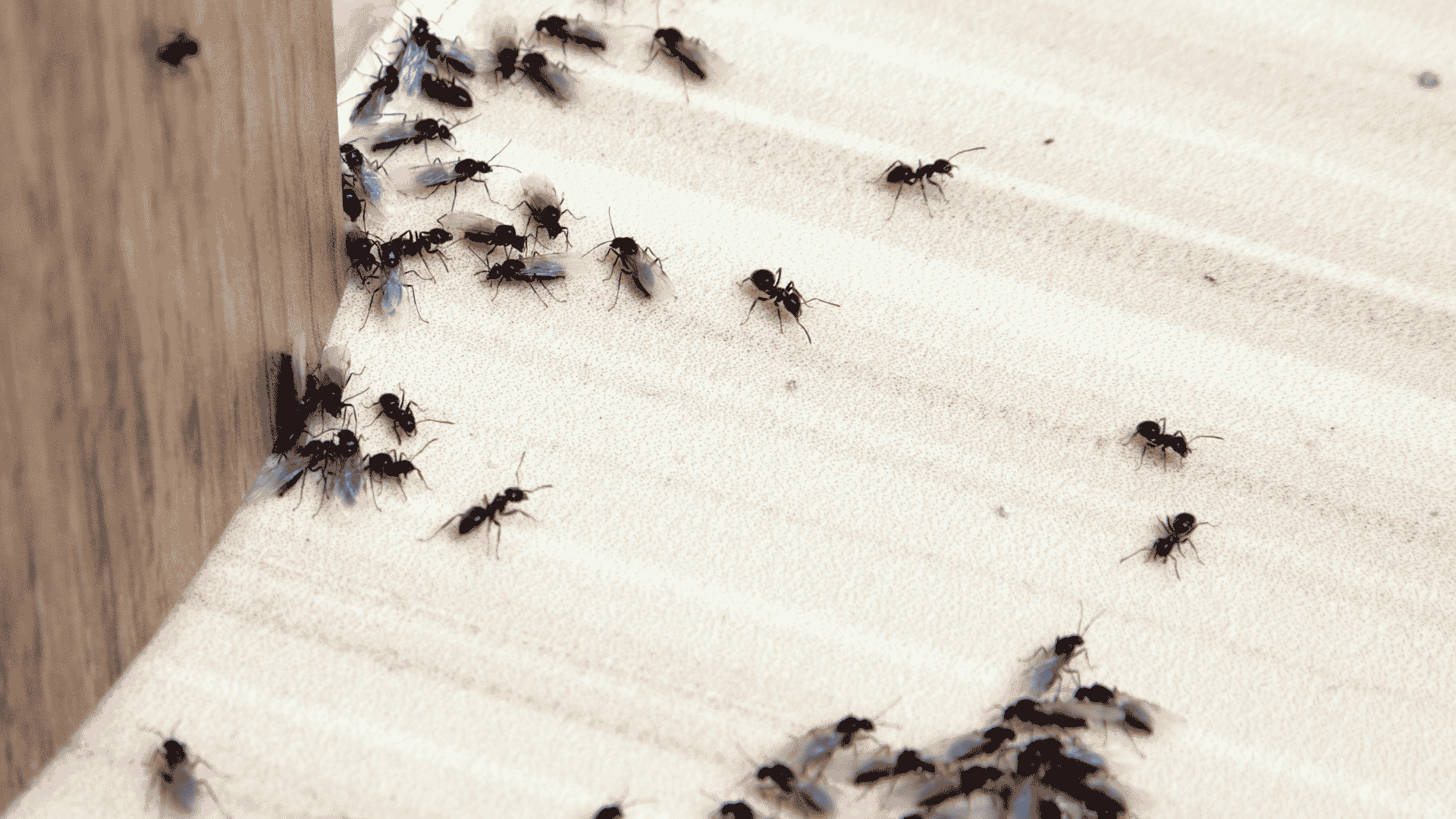
Ants are the number one pest homeowners call us about, and for good reason. A single trail across the kitchen counter often signals a colony of thousands nesting nearby, usually somewhere you cannot see. If you have wiped down the surfaces, set out store bait, and still watch the line return the next morning, you are facing a colony problem that surface spraying simply cannot solve.
At 120 Pest, we have spent more than 30 years helping families across Cherokee County get rid of ants and keep them out. Our ACE-certified team treats the nest and the entry points, not just the ants you happen to see. That difference is why professional ant control in Canton, GA tends to hold long after do-it-yourself efforts fade.
Whether you are dealing with a steady kitchen trail, a lawn full of mounds, or the large ants that signal possible wood damage, we tailor the treatment to the species and the property. Reach out through our contact page or call us to schedule an inspection.
Common Ant Species in Cherokee County
Not every ant responds to the same treatment, which is one reason a one-size-fits-all product from the store rarely works. Correct identification comes first, because it drives the entire plan. These are the three species we treat most often in local homes.
Carpenter Ants
Carpenter ants are the large, dark ants you may spot near door frames, decks, or damp wood. They do not eat wood the way termites do, but they tunnel through it to build their nests, and over time that excavation can weaken structural timber. They are drawn to moisture-damaged areas, so a plumbing leak, a clogged gutter, or old water damage often invites them in.
Fire Ants
Fire ants build the raised, dome-shaped mounds that turn up in lawns across Georgia, and they defend those mounds aggressively. A disturbed mound can produce dozens of painful, stinging bites in seconds, which makes them a genuine hazard for children and pets. Mowing over a mound only scatters the colony, so fire ant treatment needs to reach the queen underground.
Odorous House Ants
These small, dark ants earn their name from the unpleasant smell they release when crushed. They stream indoors in long trails hunting for sweets and moisture, and they are quick to relocate their nests when threatened. That mobility is exactly why a quick spray tends to fail: the visible workers die, and the colony simply moves and rebuilds.
Why DIY Ant Control Often Fails
Store products can knock down the ants you can see, but an ant infestation lives mostly out of sight. When homeowners treat only the trail, the colony keeps producing replacements. Here are the most common reasons the problem keeps coming back:
- The bait or spray targets the wrong species and never reaches the nest.
- Repellent sprays split the colony into new sub-colonies, a process called budding, which makes the problem worse.
- The exterior entry points go untreated, so foragers keep finding their way in.
- The hidden nest, indoors or in the yard, is never located.
- Treatment stops the moment the ants disappear, leaving nothing in place to prevent the next wave.
Reaching the queen and the nest, sealing the perimeter, and maintaining protection between seasons is the work of a trained ant exterminator, not a single bottle from the hardware aisle.
Our Ant Control Process: Interior and Exterior Treatment
Effective ant removal in Canton, GA starts outside, where most ants originate, and works inward. Our technicians follow a consistent process built around the full life cycle of the colony rather than the trail of the day:
- Inspection: A trained technician walks the property to identify the species, locate trails and nesting sites, and note conditions such as moisture or entry gaps that are attracting ants.
- Granular application: A granular product is applied around the yard and foundation zones to give extended protection between visits.
- Perimeter liquid application: A liquid treatment is applied at entry points and along the paths where ants trail, crawl, and hide, delivering a quick knockdown at the exterior barrier.
- Interior treatment: If ants have already moved inside, our technicians apply a targeted treatment using products chosen to be safe around your family, at no additional charge.
- Free return visits: Ants sometimes push past the exterior barrier between scheduled services. If they do, we return at no cost on the covered pests, simply by asking.
This layered approach is what separates professional ant pest control from a temporary fix. Interior service and exterior spider control are included, and treatments are typically odorless once dry. You can review the full scope of our home coverage on our residential pest control page.
Targeting Georgia’s Toughest Ants
Some ant problems need more than a standard perimeter treatment. Two species in particular call for a focused approach.
Carpenter Ant Damage Prevention
Because carpenter ants tunnel through wood, an untreated colony can quietly compromise framing, trim, and decking. Our carpenter ant treatment focuses on locating the parent nest and any satellite nests, treating them directly, and correcting the moisture conditions that drew the ants in the first place. Since large ants near wood are sometimes confused with a different wood-destroying pest, we can also arrange a termite inspection if the signs point that way.
Fire Ant Mound Elimination
Scattering a mound with a shovel or mower rarely works, because the colony survives underground and rebuilds within days. Our fire ant treatment is designed to reach the entire colony, including the queen, so the mound is eliminated rather than relocated. Because fire ants can rebuild quickly, ongoing yard treatment through a protection plan is the most reliable way to keep new mounds from forming. For families with children and pets who use the yard, clearing these mounds restores a lawn you can walk across without worry.
Natural Ant Control Options
Many local families prefer to limit the products used around children, pets, and gardens. For those households, natural and spray-free ant control options are available, using naturally occurring ingredients while still targeting the colony rather than only the visible trail. These options work best as part of a consistent plan, since gentler products may need more frequent attention to keep pressure down. During your inspection, we can talk through which approach fits your home, your yard, and your comfort level, and adjust the plan over time as conditions change. You can explore our broader treatment options on the pest control service page.
Quarterly Protection Prevents Recurring Ants
Ant pressure follows the seasons, climbing through the warm months and easing in winter. Treating once and stopping leaves a gap that lets colonies rebuild, which is why one-time efforts so often fail. Our protection plan is built around four scheduled visits a year, timed to interrupt breeding cycles before they peak.
Ongoing protection through our plan includes:
- Four scheduled visits a year to maintain a year-round barrier
- Free return visits at no cost on covered pests between services
- Guaranteed results with no long-term contract required
- Interior treatment included when pests get inside
- Local technicians who know your property, with text and email service notifications
Because every home and yard is different, pricing depends on your property and the level of activity. For current rates on our ant control services, reach out through our contact page and we will build a plan that fits.
Frequently Asked Questions
How much does ant control cost?
Pricing depends on the size of your home, the ant species involved, and the level of activity, so we provide a clear quote after an inspection rather than a flat online price. Our protection plan is a budget-friendly monthly subscription with no long-term agreement. Contact us for current pricing.
Why do ants keep coming back after I spray?
Because spraying kills the workers you see while the queen and nest remain untouched, the colony keeps producing replacements. Some over-the-counter sprays even cause the colony to split and spread. Lasting ant extermination requires reaching the nest and treating the exterior entry points, then maintaining a barrier over time.
Are your ant treatments safe for kids and pets?
We select products with family safety in mind, and treatments are typically odorless once dry. For households that want to minimize product use, natural and spray-free options are available. Your technician can walk you through the safest approach for your home during the inspection.
What is the difference between carpenter ants and termites?
Carpenter ants tunnel through wood to nest but do not eat it, while termites actually consume wood as food. Both can cause structural damage, and the two are easy to confuse. If we spot signs during your visit, we can recommend a professional termite inspection to be sure.
Schedule Your Ant Control Service
You do not have to keep chasing the same trail across your kitchen or step around mounds in your own yard. As a family-owned company based in Canton and serving Cherokee County, Woodstock, Marietta, Milton, and the surrounding communities, we treat ant problems at the source and back our work with free return visits on covered pests. Call us at (404) 247-8091 or reach out through our contact page to schedule your inspection and put an end to the ant infestation for good.