
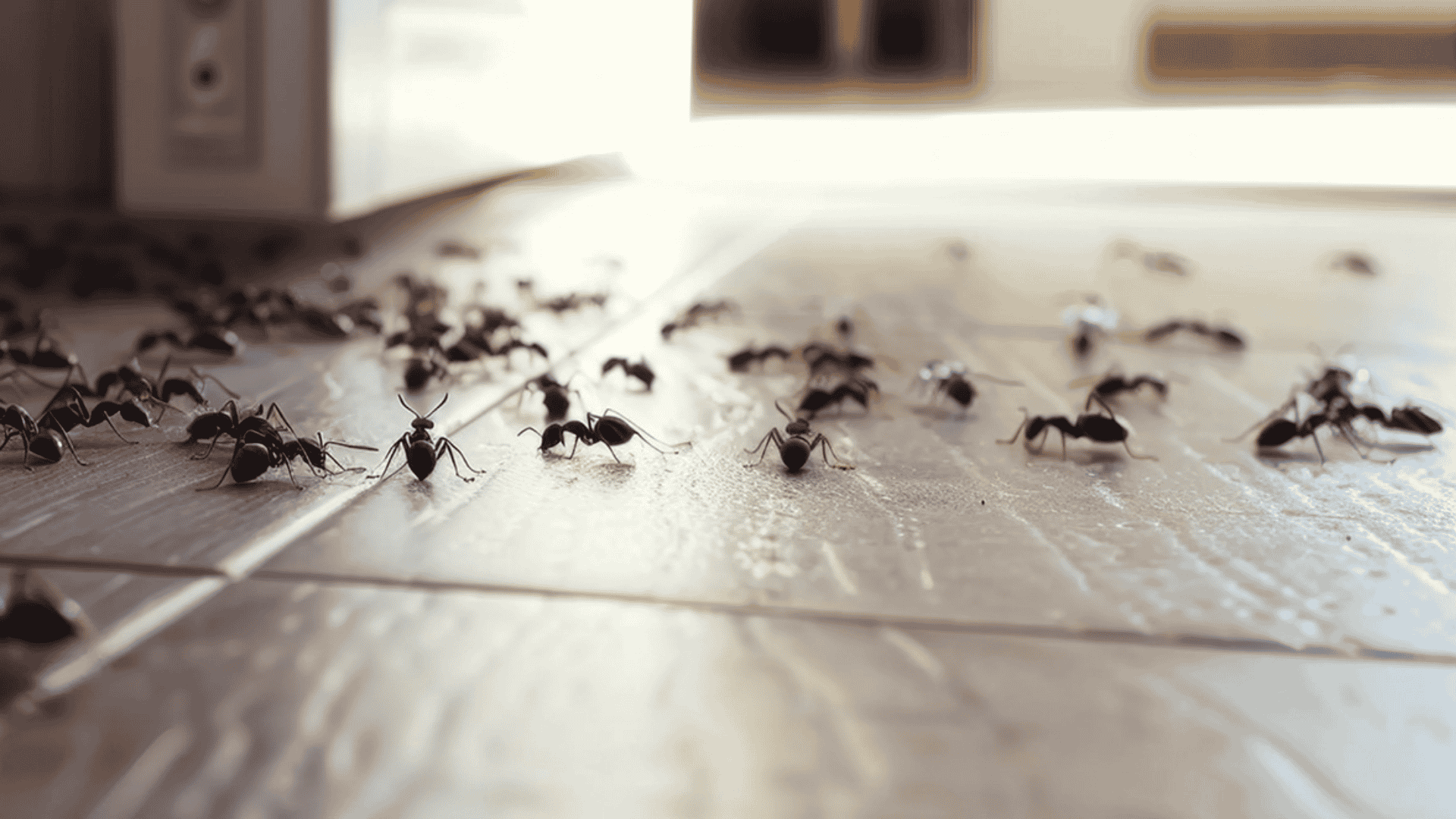
If you’ve spotted a line of ants marching across your kitchen counter or noticed a few stragglers near your bathroom sink, you’re not alone. Ant problems are one of the most common pest complaints among homeowners in Canton, GA, and throughout Cherokee County, especially during warmer months when colonies become more active.
By the time ants show up inside your home, the colony supporting them could number in the tens of thousands. Recognizing the signs of an ant infestation early can save you from frustration, wasted money, and even serious structural damage. Below are seven clear signs that it’s time to call a professional.
Quick Summary:
- Persistent ant trails that return after cleaning signal a deeper colony problem
- Store-bought sprays and baits often only kill foraging ants without reaching the nest
- Ants in your kitchen or pantry can contaminate food and indicate moisture issues
- Sawdust-like piles near wood structures may point to carpenter ant activity
- Ants appearing in multiple rooms suggest the infestation has spread significantly
- Faint rustling sounds inside walls can mean a large colony has nested in your home’s structure
- Seasonal recurrence year after year means the colony was never fully eliminated
Sign 1: You’re Seeing Ant Trails That Keep Coming Back
One of the earliest signs of an ant problem is the trail itself: a steady, single-file line of ants moving between a food source and their nest. Many homeowners wipe down the trail and assume the problem is handled, but the next morning it’s right back in the same spot.
What Ant Trails Really Mean
Foraging ants lay down chemical signals called pheromones to guide other colony members to food or water. Wiping the surface clean may temporarily disrupt the trail, but it doesn’t eliminate the pheromone markers, and it certainly doesn’t address the colony itself.
Common places Canton-area homeowners notice persistent ant trails:
- Along kitchen countertops and backsplashes
- Near pet food bowls on the floor
- Around bathroom sinks and tub edges where moisture collects
- Along window frames and door thresholds
- Inside pantries and near trash receptacles
If you’ve cleaned the same trail two or three times and it keeps returning, surface-level cleaning alone won’t solve it.
Sign 2: DIY Ant Sprays and Baits Aren’t Working
It’s natural to reach for a can of ant spray or bait stations from the hardware store when you first notice ants. But when you’ve gone through multiple rounds of store-bought treatments and the ants keep showing up, the problem is beyond what DIY solutions can address.
Why Store-Bought Solutions Often Fall Short
Most over-the-counter ant products target the ants you can see, not the colony producing them. A typical colony can have one or more queens continuously producing new workers, and killing foragers on your countertop does nothing to slow that production. Here are the most common DIY methods and their limitations:
- Contact sprays kill ants on the spot but create a repellent barrier that redirects the trail to a new entry point
- Bait stations can work in theory, but the wrong bait type for the ant species may be ignored entirely
- Home remedies like vinegar or cinnamon may mask pheromone trails temporarily but offer zero lasting colony control
- Perimeter sprays applied around the foundation often push ants to find alternative routes inside
A professional pest control service begins with identifying the specific ant species, which determines the most effective treatment approach. Without that knowledge, DIY efforts are often just a cycle of trial and error.
Sign 3: You’re Finding Ants in Your Kitchen or Pantry
Kitchens are the number one target for ants because they provide food, water, and warmth. In Georgia’s humid climate, moisture around sinks and dishwashers also attracts species like odorous house ants and Argentine ants.
Why Kitchens Are a Prime Target
Leaving crumbs out can attract a few scouts, and cleaning up may resolve that. But if you’re keeping a spotless kitchen and still finding ants, the problem is structural, not behavioral. Kitchen hotspots where ants commonly appear:
- Inside pantry shelving, particularly around sugar, honey, and baking goods
- Under the sink where plumbing creates consistent moisture
- Around the dishwasher door seal and drain area
- Near the stove where grease residue accumulates
- Along refrigerator edges where condensation forms
When ants have established themselves in your kitchen despite good hygiene, a trained technician can locate entry points, identify the species, and apply targeted treatments that eliminate the colony rather than just the visible foragers.
Sign 4: You’ve Noticed Small Piles of Sawdust or Wood Shavings
This sign should raise the most concern. Small, cone-shaped piles of fine sawdust near wooden structures like door frames, window sills, or support beams could mean carpenter ants. Unlike termites, carpenter ants don’t eat wood; they excavate it to create smooth galleries for nesting, pushing the debris (called frass) out of small openings.
Carpenter Ant Damage Signs to Watch For
Carpenter ants are among the largest ant species in Georgia, often a quarter-inch to a half-inch long, typically black or dark brown, and most active at night. Beyond frass deposits, other indicators include:
- Hollow-sounding wood when you tap on beams, door frames, or structural supports
- Smooth, clean galleries inside damaged wood, unlike the mud-packed tunnels termites create
- Winged ants emerging indoors during spring, signaling a mature colony
- Moisture-damaged wood around bathrooms, rooflines, or crawl spaces
Left untreated, carpenter ant damage can compromise your home’s structural integrity. With over 30 years of experience handling both ant and termite issues in the Canton area, the team at 120 Pest can assess whether the damage is from carpenter ants, termites, or both.
Sign 5: Ants Are Appearing in Multiple Rooms
When ants first show up, they’re usually concentrated in one area. But if you’re seeing them in the living room, bedrooms, laundry room, or garage, the problem has progressed. Multiple sighting locations suggest that the colony has grown large enough to send foragers in several directions, or that satellite colonies have formed within your walls.
When a Few Ants Become a Whole-House Problem
Warning signs that an infestation has expanded:
- Ants appearing in rooms with no obvious food or water source
- Trails showing up on different floors of the house
- Ants emerging from multiple cracks, outlets, or baseboards
- Activity continuing during cooler hours or at night
- Different sizes of ants visible, indicating multiple castes from a large colony
A whole-house ant problem is rarely solved room by room. Professional treatment addresses the colony at its source and creates a protective barrier to prevent re-entry.
Sign 6: You’re Hearing Faint Rustling in Walls or Ceilings
If you hear a soft rustling or crackling sound from inside a wall or ceiling at night, it may not be your imagination. Large carpenter ant colonies can produce audible sounds as thousands of ants move through their galleries and excavate nesting space.
Hidden Colonies Inside Your Home’s Structure
Georgia’s humidity softens wood over time, creating prime nesting conditions for carpenter ants. These hidden colonies can grow for months or years before outward signs appear. A professional inspection can pinpoint the colony’s location without unnecessary wall damage, and early detection is always cheaper than structural repairs.
Sign 7: Ant Problems Return Every Season
You dealt with ants last spring and again last summer. Now that warm weather is back, they’re in the same places all over again. Seasonal recurrence is one of the clearest signs that the underlying colony was never eliminated.
Breaking the Cycle of Recurring Infestations
The key is shifting from reactive treatments to a preventive approach. A comprehensive residential pest control plan creates ongoing protection around your home. At 120 Pest, our residential pest protection plan covers ants, roaches, spiders, mice, and over 15 other common Georgia pests with scheduled service visits and free return visits between appointments.
Recurring infestations also suggest conditions around your home that attract ants year after year: mulch beds against the foundation, tree branches touching the roofline, or standing moisture near exterior walls.
DIY Ant Control vs. Professional Treatment: When to Make the Call
DIY may be sufficient when:
- You’ve seen only a handful of ants in one location
- The problem resolved after cleaning and hasn’t returned
- There’s an obvious attractant you’ve removed
- No signs of carpenter ants or structural damage
Professional help is needed when:
- Trails persist after repeated cleaning and DIY treatments
- Ants are present in multiple rooms or floors
- You’re seeing large black ants or finding sawdust-like debris near wood
- The problem recurs seasonally
- DIY products have failed after two or more attempts
120 Pest is family-owned, based in Canton, with over 30 years of expertise and ACE structural pest control certification. We know the ant species common to Cherokee County and build treatment plans that solve the problem.
Frequently Asked Questions
How do I know if I have carpenter ants or regular ants?
Carpenter ants are noticeably larger (quarter-inch to half-inch long), usually black or dark reddish-brown. The telltale sign is frass: small piles of fine, sawdust-like shavings near wood. Regular household ants are much smaller and don’t cause wood damage.
When should I call an exterminator for ants?
When DIY methods have failed, ants appear in multiple areas, you suspect carpenter ants, or the problem returns year after year. Contact 120 Pest to schedule an inspection.
Can ants cause structural damage to my home?
Most household ant species don’t cause structural damage, but carpenter ants are the major exception. Over time, untreated colonies can weaken door frames, window sills, and support beams. If you suspect wood-destroying pest activity, a professional inspection is the safest course of action.
How quickly can a professional ant treatment work?
Many homeowners notice a significant reduction in activity within a few days. Complete colony elimination may take one to two weeks as treatment products work through the colony structure.
Take Action Before Ants Take Over
Ant problems rarely resolve on their own, and the longer you wait, the more entrenched the colony becomes. Whether you’re dealing with kitchen ants that won’t quit, suspicious sawdust near your door frames, or the same seasonal invasion you’ve fought for years, recognizing these signs early protects your home.
120 Pest has been helping homeowners across Canton, Woodstock, Holly Springs, Alpharetta, and Cherokee County deal with ant problems for over three decades. If any of these signs sound familiar, reach out to our team for a professional evaluation and let’s get your ant problem resolved the right way.